

Kuiil: A Free Soul
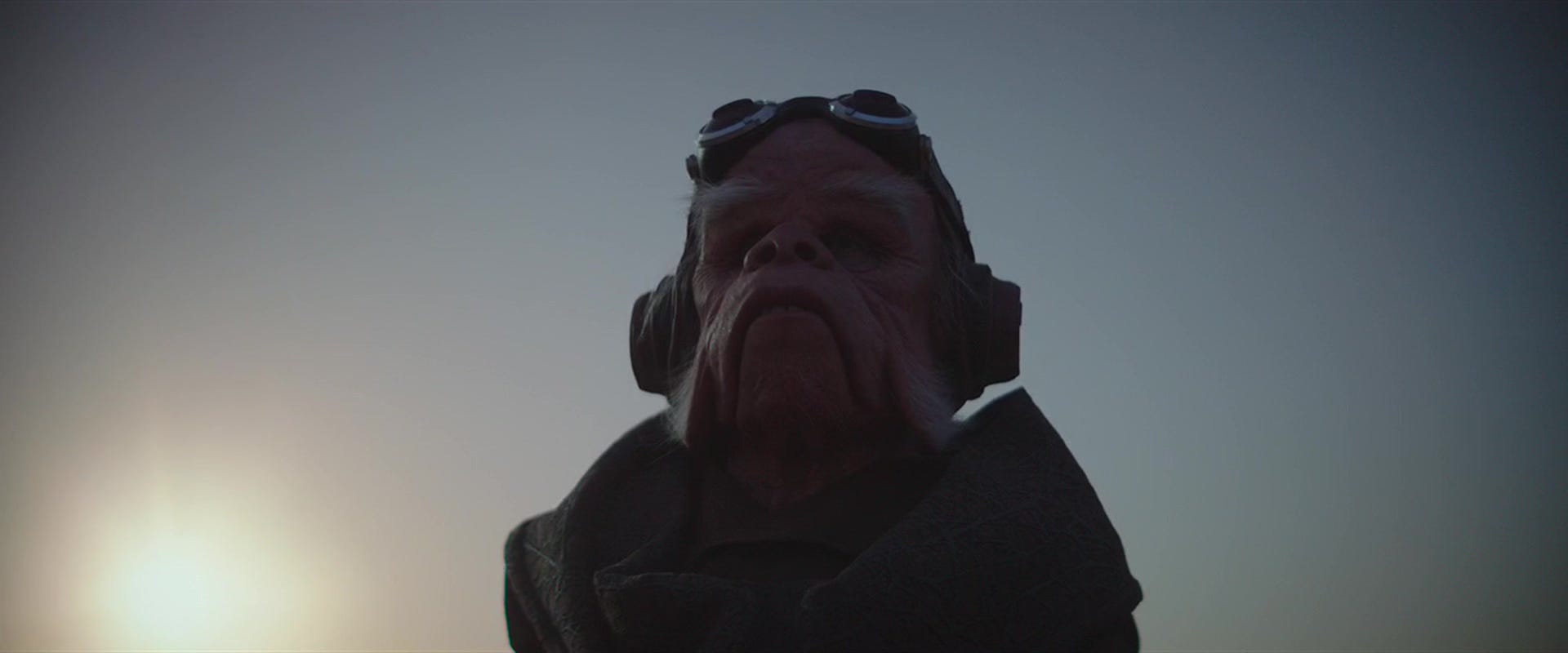
In the first season of The Mandalorian, Din Djarin finds a valuable mentor in the Ugnaught named Kuiil. In “The Mandalorian” (The Mandalorian 1.1), Kuiil rescues him from some wild animals called blurggs and teaches him to ride one, having learned how to tame them himself. In “The Child” (The Mandalorian 1.2), Kuiil negotiates with the animalistic Jawas for the recovery of the parts they stole from the Mandalorian’s ship. Although the Mandalorian speaks Jawa poorly — “You sound like a Wookie,” a Jawa taunts — and would rather use violence, Kuiil has learned to speak Jawa fluently and chooses diplomacy, calming the combative parties as he calmed the blurggs. Finally, in “The Reckoning” (The Mandalorian 1.7), Kuiil reconstructs IG-11, a bounty hunter droid which the Mandalorian had destroyed, and reprograms and teaches it to be a servant and protector. In that episode and the next, “Redemption” (The Mandalorian 1.8), the Mandalorian learns to trust this droid that Kuiil has tamed, including with the life of Grogu, the child that IG-11 was once programmed to kill. Three times, Kuiil teaches the Mandalorian to make peace and cooperate with beings that he himself has learned to make peaceable and cooperative.
In the symbolic and tripartite logic of Star Wars, Kuiil’s harmony with these beings reflects how he has balanced in himself the parts of the soul that these beings represent. The blurggs represent the appetitive part of the soul. A blurgg’s only instinct is for survival through food and procreation. (In fact, blurggs conflate the two: Kuiil tells Mando “the males are all eaten during mating.”) The Jawas also represent the appetite: they steal the Mandalorian’s ship’s parts to make money, and they return the parts in exchange for a rare delicacy. In contrast, IG-11 represents the intellectual part of the soul. When it was still a bounty hunter, its calculations and choices were only concerned with what was effective for capturing its targets and evading capture itself. Just like these beings, the appetitive and intellectual parts of the soul can be destructive when given control of the whole. Thus, when Kuiil brings both his docile blurggs and the reformed IG-11 on a mission to protect Grogu, it reflects how he has mastered his appetitive and intellectual parts to put them both in service of a third: the relational part of the soul that cares for others.
Kuiil reveals in “The Reckoning” that he was once “sold to the Empire, in indentured servitude,” and it cost him “the labor of three of your human lifetimes” to regain his freedom. But what is worse still than slavery to political tyranny is slavery to the spiritual tyranny of either unbridled appetite or unfeeling rationalism. Released from servitude to either of these extremes, Kuiil’s soul is free to willingly and sacrificially serve others. When Kuiil dies “to protect the child from Imperial slavery,” he dies a free being, indeed.
EXPLORE FURTHER…
Characters: Din Djarin / IG-11 / Kuiil
Shows: The Mandalorian
GO DEEPER INTO THE ARCHIVES…
Concepts: animals / appetite / droids / freedom / language and translation / mediators / reason / sacrifice / slavery / teachers and students / tripartite soul / tyranny
Interpretive Tools: Tripartite Soul Theory
READ MORE ABOUT…
Follow The Jedi Archives on…