

None Left Behind
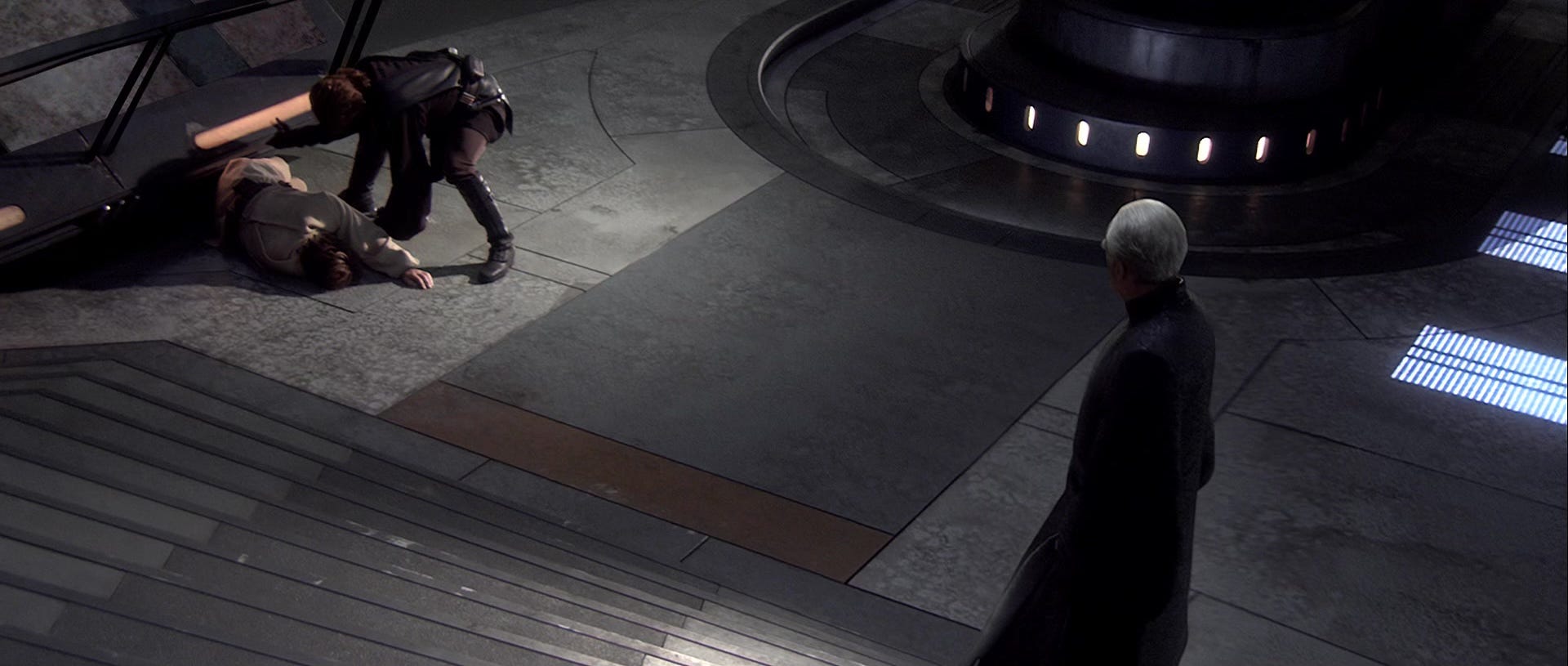
In the first act of both Revenge of the Sith and A New Hope, a rescue is followed by an old man telling a Skywalker they must hurry to safety, and there is a debate over whether they can rescue the Skywalker’s friend without dooming their own chances of survival. The resemblances between the two scenes, down to a shared sound effect, underscore how a fear-driven sense of urgency, combined with an unhealthy self-regard, can be used to justify abandonment.
In Revenge of the Sith, Anakin Skywalker rescues Chancellor Palpatine from captivity to Count Dooku. Anakin feels ashamed for killing Dooku when he was unarmed, but Palpatine reminds him: “It wasn’t the first time, Anakin. Remember what you told me about your mother, and the Sand People?” The audience hears the cry of a Tusken Raider, and then Palpatine says, “Now we must leave, before more security droids arrive.”
Anakin goes over to Obi-Wan Kenobi, who was knocked unconscious during the fight with Dooku. But Palpatine, in a hurry to escape, exaggerates the seriousness of Obi-Wan’s condition and the risk of trying to save him: “Leave him, or we’ll never make it!” Anakin retorts, “His fate will be the same as ours,” and against the protest of the older man, the younger man carries his fallen friend away.
In A New Hope, Obi-Wan rescues Luke Skywalker from an ambush by Tusken Raiders. Afterwards, Obi-Wan hears the cry of a Tusken Raider, prompting him to say, “I think we’d better get indoors. The Sand People are easily startled, but they’ll soon be back, and in greater numbers.”
Luke and Obi-Wan go over to C-3PO, who was knocked unconscious during the ambush. This time, it is C-3PO, the character who cannot get himself to safety, who exaggerates the seriousness of his own condition and the risk of trying to save him: “There’s no sense in your risking yourself on my account. I’m done for.” Luke retorts, “No, you’re not! What kind of talk is that?” and even though Obi-Wan is in a hurry to escape (“Quickly, they’re on the move”), the older man helps the younger man carry his fallen friend away.
The first scene emphasizes Palpatine’s excessive self-regard: he sees Obi-Wan’s life as less important than his own. The second scene emphasizes C-3PO’s deficient self-regard: he doesn’t think his own life worth saving. Fortunately, both characters’ demands are overruled by those who will not let the fear of losing their own lives prevent them from protecting another’s equally valuable life.
EXPLORE FURTHER…
Characters: Anakin Skywalker / C-3PO / Luke Skywalker / Obi-Wan Kenobi / Palpatine
Films: Episode III: Revenge of the Sith / Episode IV: A New Hope
GO DEEPER INTO THE ARCHIVES…
Concepts: fear / life and death / safety and security / selfishness
READ MORE ABOUT…
Follow The Jedi Archives on…
To add to what you said, I also believe Palpatine wanted to abandon Obi-Wan as a sly way of getting rid of Anakin's master, one of his biggest positive influences.