

Maul in the Cave
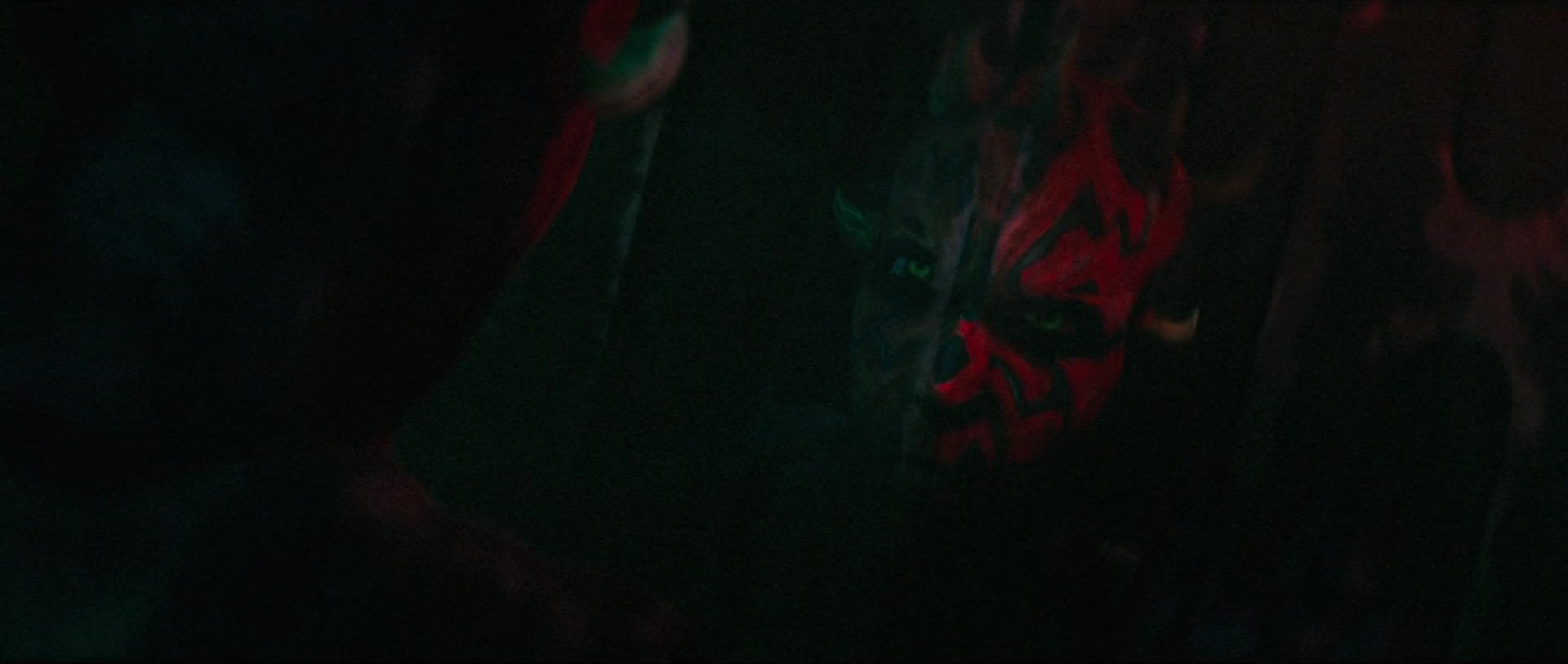
In “The Creeping Fear” (Maul – Shadow Lord 1.8), Maul descends into the tunnels of Janix after a duel with Imperial Inquisitors. The descent into the cave is a recurring motif throughout Star Wars, symbolizing an opportunity to attain self-knowledge: characters descend into caves when they have to reckon with repressed or unconscious parts of themselves. Maul’s cave descent is no different: in the caves under Janix, he sees a reflection of his younger self, a part of himself he wants to repress because of the painful memories it is associated with.
It is symbolically apropos that Maul sees this repressed aspect of his psyche in a pool of water. According to the archetypes of the psychologist Carl Jung, water is symbolic of the unconscious, and Maul’s first reaction to his young reflection is to try and push it out of his conscious mind, splashing the water and saying, “I hate you!”
As Maul descends deeper into the cave, he sees visions of the various traumatic experiences he has suffered from his youth onward, most of which were inflicted by his former master Darth Sidious, who took him away from his home and brother and groomed him to be a weapon against the Jedi. After focusing his hatred on Sidious – “You did this to me! You did this!” – Maul lets go of his self-hatred and accepts his vulnerable younger self, looking at his reflection and gently telling it, “It’s all right.”
The imagery of this sequence overtly harkens back to Star Wars‘ original cave descent: Luke Skywalker’s descent into the dark side cave on Dagobah in The Empire Strikes Back. In this cave, Luke duels an apparition of Darth Vader, strikes off its head, and then sees the disturbing vision of his own face in Vader’s helmet.
Like Luke, Maul sees his own face when he descends into a cave, but they respond to their experiences in opposite ways. Luke’s vision of his own face points to his unknown kinship with his father and prompts him to reflect on his own internal darkness. Because he is ultimately willing to face his own capacity for evil instead of focusing his hatred on an external tormentor, Luke is able to extend redemptive compassion towards Vader. Maul, however, reacts to his vision of his own face by focusing on his hatred for his enemy, telling his younger self, “We won’t let [Sidious] do this to anyone else.” In his fixation on the evil that has been done to him, he remains blind to his own capacity for evil, and thus proceeds to enact the same tragic cycle. By taking Devon Izara away from her master and grooming her to be a weapon against his enemies, he is doing to her exactly what he hates Sidious for doing to him.
EXPLORE FURTHER…
Characters: Darth Maul / Luke Skywalker
Shows: Maul – Shadow Lord
GO DEEPER INTO THE ARCHIVES…
Concepts: ascent and descent / caves / dreams and visions / good and evil / hate / knowledge / repression / water
Influences: Jung
READ MORE ABOUT…
Follow The Jedi Archives on…
Which is, not coincidentally, the most common pattern for people we thin of as "evil." They simply recapitulate the horrific acts that were done to them at an early age by parents or guardians.